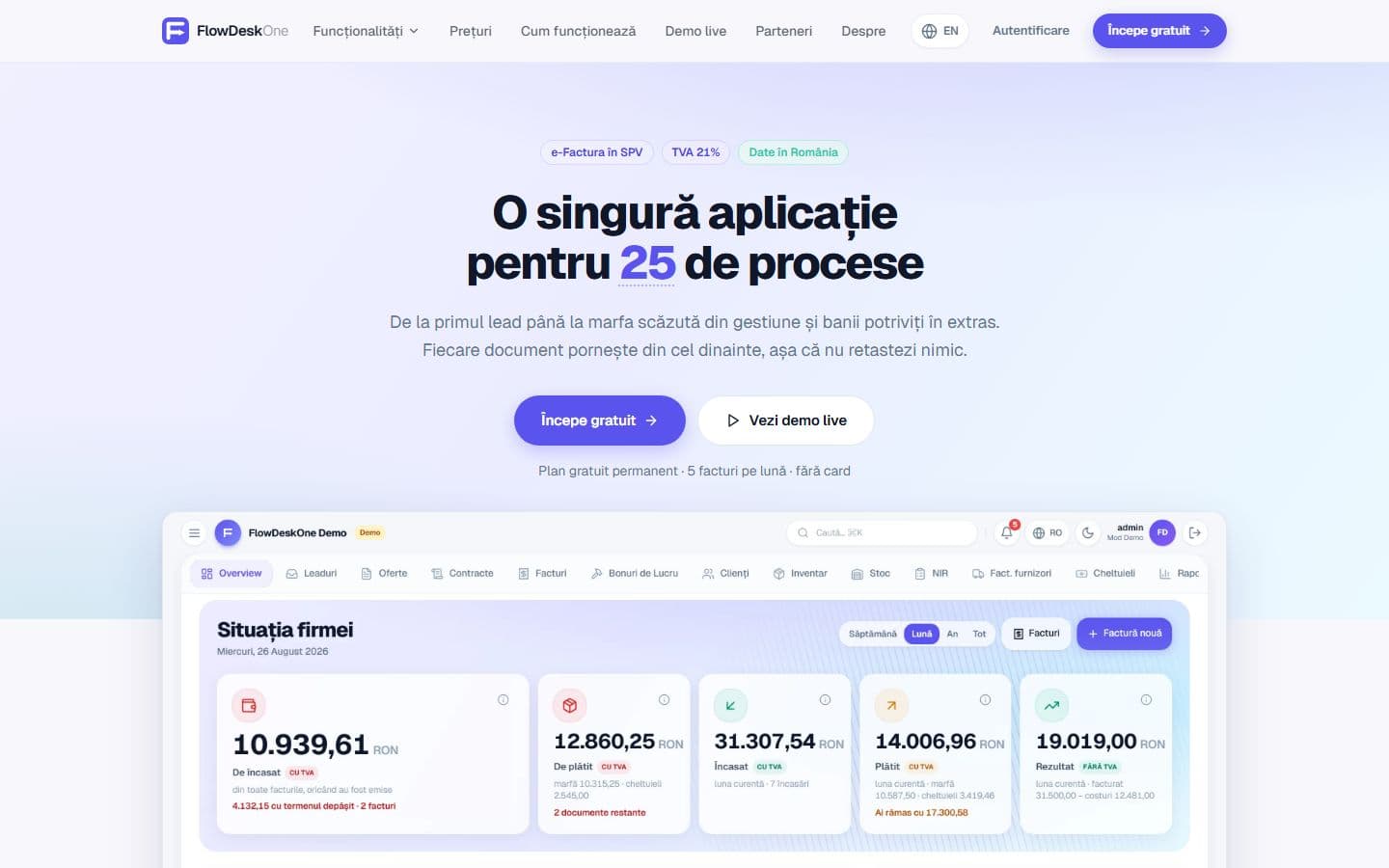
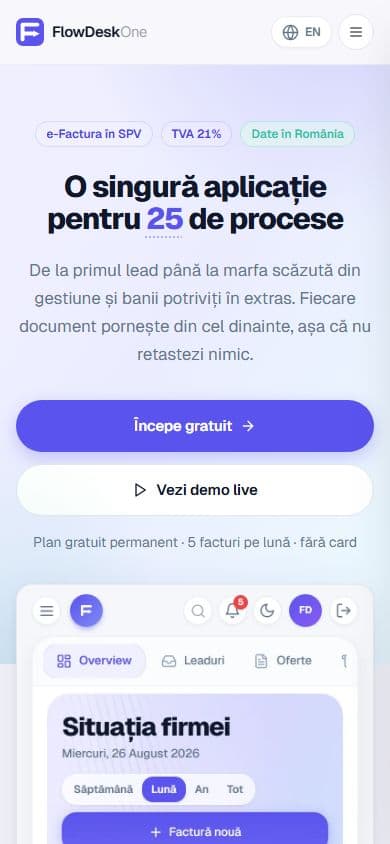
From lead to signed quote, contract, work order and an invoice filed with the tax authority — in a single flow.
ANAF e-invoicinge-TransportStock and receivingDemo available
Romanian e-invoicing and e-transport reporting, banking, fleet: integrations built as modules inside a larger product, not as isolated scripts that break at the first update.
Invoices are validated against the RO_CIUS standard and filed automatically with the Romanian tax authority; the status comes back into your list.
For goods going on the road, the declaration is generated from the same document, with no separate system to fill in.
Vehicle positions and the day's route sync with tickets and invoicing instead of staying in separate apps.
When two existing systems need to talk to each other, the integration is built on their APIs, with no manual re-entry in between.
From lead to signed quote, contract, work order and an invoice filed with the tax authority — in a single flow.
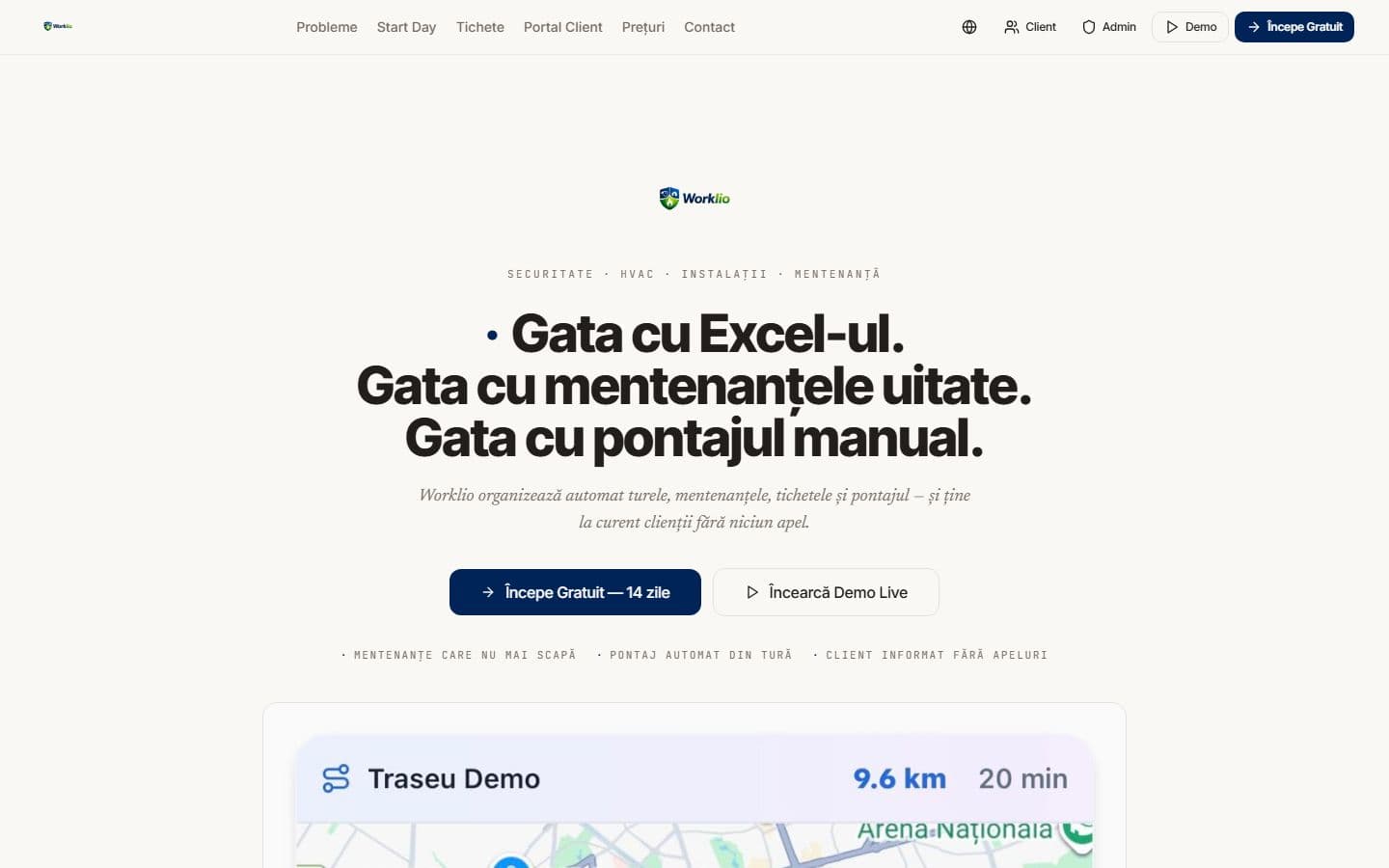
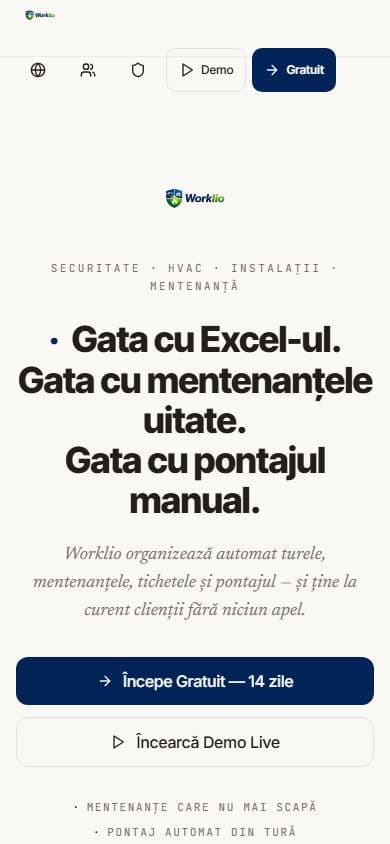
Fleet, tickets with deadlines and invoicing in one system: the dispatcher sees the office, the technician sees the day's route on their phone.
A day with the people who enter the same data twice. What comes out is the list of integrations, ordered by how often I saw something retyped.
The integration goes in as a module of the existing system, not as a parallel process to maintain on the side.
I monitor the automated runs and step in when one fails, before you notice an invoice or a declaration is missing.
Tax filings, the bank or an old system — tell me where the same data gets entered twice and I tell you what can be connected.